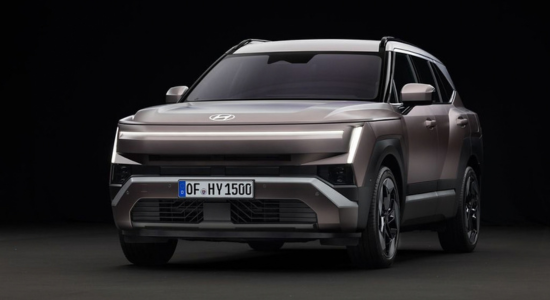
Hyundai Motor today unveiled the all-new TUCSON, a bold C-segment SUV combining advanced electrified powertrains with a next-generation infotainment system, Pleos Connect, for enhanced comfort and versatile capability.
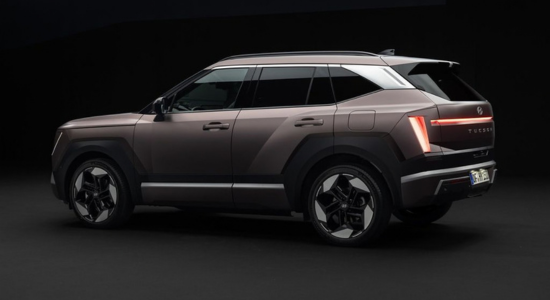
Guided by Hyundai Motor’s ‘Art of Steel’ design philosophy, the all-new TUCSON blends muscular exterior styling with a purposeful, organised interior that simplifies daily driving while supporting various lifestyles and life stages.
With increased dimensions, a spacious and flexible cabin and Hyundai’s advanced electrified powertrains, the new TUCSON has been developed to meet a broad range of customer needs – from everyday commuting and family use to longer journeys and leisure activities.
For European markets, the all-new TUCSON is produced at Hyundai Motor Manufacturing Czech in the Czech Republic. Since the launch of the first generation in 2004, TUCSON has established itself as one of Hyundai's most successful models in Europe, with more than 2 million units sold across the region. In 2025, it ranked as the number one model in the private C-SUV segment in Europe*.
Renewing an icon is never easy. We could have played it safe and simply evolved a successful model. But that is not Hyundai’s style. We challenged ourselves to move TUCSON forward in every area that matters to customers, from design and comfort to technology and efficiency. The result is not simply the next TUCSON. It is the best TUCSON we have ever made.
Xavier MartinetPresident and CEO of Hyundai Motor Europe
The all-new TUCSON measures 4,560 mm in length, 1,900 mm in width and 1,670 mm in height. Compared with its predecessor, it is 35 mm longer, 35 mm wider and 20 mm taller, contributing to a stronger road presence while creating additional interior space.
The front overhang has increased by 20 mm, supporting pedestrian-protection requirements, while the door opening angle has increased from 73 to 83 degrees to make access easier.
New exterior colours introduced for Europe include Moonlake Blue Metallic and Moonlake Blue Matte, Rich Walnut Metallic and Rich Walnut Matte, as well as Ignite Red.
A further dynamically styled version of the all-new TUCSON will be unveiled at the Paris Motor Show on 12 October 2026.
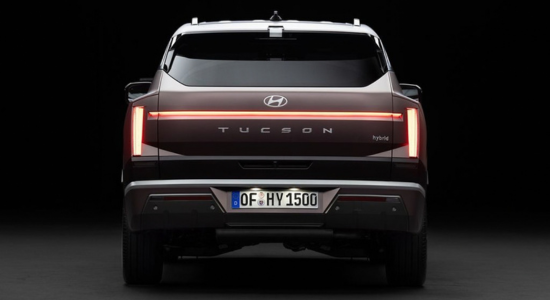
What new lighting signatures define the all-new TUCSON?
At the front, H-Edge lighting combines indirect central illumination with edge lighting to emphasise the vehicle’s horizontal proportions and create a wider, more stable appearance. The lighting is integrated into the front design to provide a distinctive signature by day and night.
At the rear, the sculptural Prism Rear Lamp sharpens the vehicle’s volume and outline. Its three-dimensional internal structure creates a distinctive lighting signature and reinforces the precise, technical character of the rear design.
Depending on specification, the all-new TUCSON is also available with Micro Pixel Lighting (MPL). Using 25,600 individual LED pixels, the system enables precisely controlled beam patterns as well as welcome and farewell animations. LED rear lamps are standard across the European range, while availability in other markets varies depending on regional specification.
How does the all-new TUCSON redefine cabin comfort and versatility?
The all-new TUCSON’s interior design creates a furnished space that prioritizes visual refinement and thoughtfulness through furniture-inspired comfort and intuitive controls, delivering a premium user experience. Every surface, from soft cushioning to ergonomically positioned displays, supports stress reduction, relaxation and a calmer cabin environment.
The cabin redefines minimalism for SUVs through purposeful design. The two-layered dashboard design separates form and function: a horizontal upper layer provides visual comfort and clarity, while a deep open tray below provides storage space. Soft, voluminous cushioning applied across the top of the instrument panel, doors and console armrest create a premium and relaxing interior, scaling home-based, furniture-like comfort for the automotive environment.
To help minimise driver distraction, frequently used information and controls are positioned within the driver’s natural field of view. A slim 9.9-inch digital instrument display sits above the steering wheel, while an available Head-Up Display projects key driving information directly onto the windscreen, allowing drivers to stay informed without taking their eyes off the road. For enhanced comfort and ergonomics, an electrically adjustable steering wheel allows drivers to easily fine-tune their ideal driving position.
Physical buttons below the central infotainment display provide direct access to key functions. The extended centre-console armrest is designed to provide additional support when operating the central display, and two 15 W wireless charging pads are integrated into the console, together with concealed storage for smaller personal items. Class-leading device charging convenience is further supported by four 100 W USB-C ports, enabling rapid charging of laptops, tablets and other compatible devices throughout the cabin.
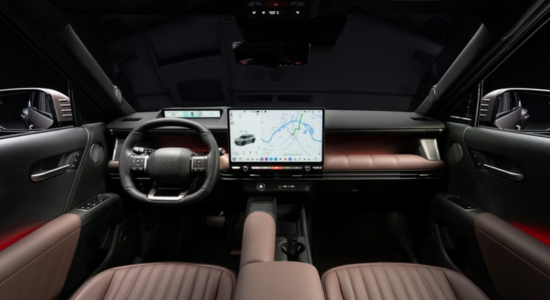
A steering-column-mounted shift-by-wire selector frees up additional space in the centre console. An illuminated gear indicator and one-button park engagement simplify driving dynamics while strengthening the ‘Eyes on the Road, Hands on the Wheel’ design philosophy.
The all-new TUCSON offers generous passenger space, including 1,038 mm of front headroom, 1,002 mm of rear legroom and 1,470 mm of front shoulder room.
Depending on specification, comfort features include the driver’s Ergo Motion Seat, which uses a seven-cell pneumatic system to provide lumbar and bolster support as well as massage functions, as well as a driver and passenger Relaxation Comfort Seat offering a one-touch recline function for added comfort during breaks.
The Multi-Air Mode System provides sophisticated climate comfort by routing conditioned air through main vents, multi-vents, and floor-level distribution with active management, effectively eliminating uncomfortable direct airflow. A three-zone climate-control system allows temperature settings to be adjusted separately for different areas of the cabin.
The available 13.5V Metal-Coated Heated Glass windscreen offers a 15-minute full de-icing capability for harsh winter conditions. In the summer, the glass’s 60 percent solar energy rejection keeps the interior 2 degrees cooler, reducing air conditioning strain and fuel consumption. This transparent conductive coating technology integrates more than 20 layers of metal, dielectric and ceramic materials to provide functionality without visible wire patterns, preserving the cabin’s visual purity.
Practical details throughout the cabin further enhance daily usability, with concealed umbrella holders integrated into both front door panels and dedicated cup holders incorporated into the rear door trim for added convenience.
The AddGear port in the second row supports Hyundai’s open AddGear ecosystem, allowing occupants to seamlessly integrate accessories such as smartphone holders, tablet mounts, fragrance diffusers and other lifestyle-focused solutions for a more personalized interior environment.
European interior colour combinations include Black, Dark Blue Gray/Dove Gray and Misty Plum. Available materials include cloth, cloth/leather and leather.
How does TUCSON’s advanced hybrid system balance performance, efficiency and comfort?
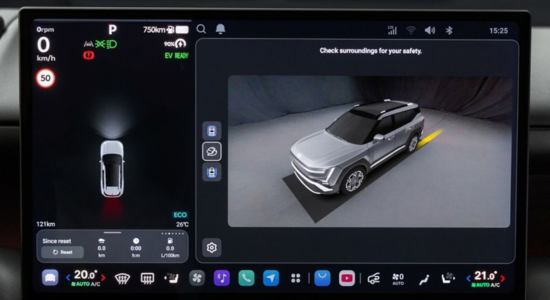
At the heart of the all-new TUCSON’s electrified powertrain line-up is Hyundai’s advanced hybrid system, developed to combine responsive performance with efficient and refined everyday driving.
HEV Stay Mode allows selected vehicle functions, including climate control, audio and device charging to remain available while the combustion engine is switched off, providing a quieter and more comfortable cabin environment during stops or breaks.
The powertrain line-up includes a 150 PS 1.6 T-GDI petrol engine, offered with either a six-speed manual transmission or a 48V mild hybrid system and seven-speed dual-clutch transmission (7DCT), alongside hybrid and plug-in hybrid variants. The hybrid delivers 245 PS and 380 Nm of torque, while the plug-in hybrid TUCSON PHEV combines a 1.6-litre turbocharged petrol engine with a plug-in hybrid system producing up to 292 PS and 380 Nm of torque. Its 17.1 kWh battery provides an estimated electric-only range of up to 81 km with 17-inch wheels, subject to final homologation. A 7.2 kW on-board charger supports convenient AC charging at home or at public charging points.
A comprehensive range of Hyundai SmartSense driver-assistance systems is also available. Forward Collision-Avoidance Assist 2 and Highway Driving Assist 2 complement technologies including Intelligent Speed Limit Assist (ISLA) and Navigation-based Smart Cruise Control. ISLA supports drivers in complying with detected speed limits, while Navigation-based Smart Cruise Control uses navigation information to adapt vehicle speed to selected road conditions.
How does TUCSON support occupant safety?
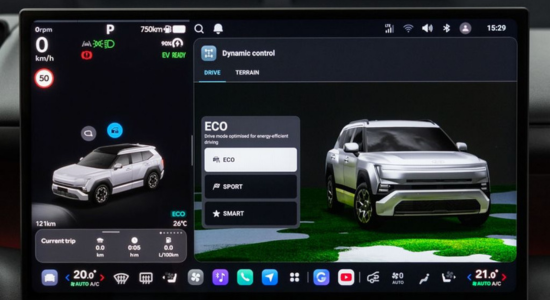
The all-new TUCSON combines an enhanced body structure with Hyundai SmartSense safety and driver-assistance technologies to support occupant protection and driver confidence in everyday use.
The all-new TUCSON is equipped with seven airbags, including driver and front-passenger airbags, front-side airbags, a centre-side airbag and full-length curtain airbags. The body structure uses hot-stamped high-strength steel and reinforced centre pillars to help manage impact forces in the event of a collision.
The In-Cabin Monitoring Unit (ICMU) uses camera-based technology to monitor driver attention and occupant conditions. The system can detect factors such as driver gaze and signs of drowsiness and provide appropriate warnings.
Child Presence Detection (CPD) and Rear Occupant Alert (ROA) provide additional support by helping alert drivers when an occupant may have been left in the vehicle.
Together, the all-new TUCSON’s design, electrified powertrains, connected technology, practical interior and comprehensive safety equipment build on the strengths that have established TUCSON as a core model in Hyundai’s European SUV line-up.
